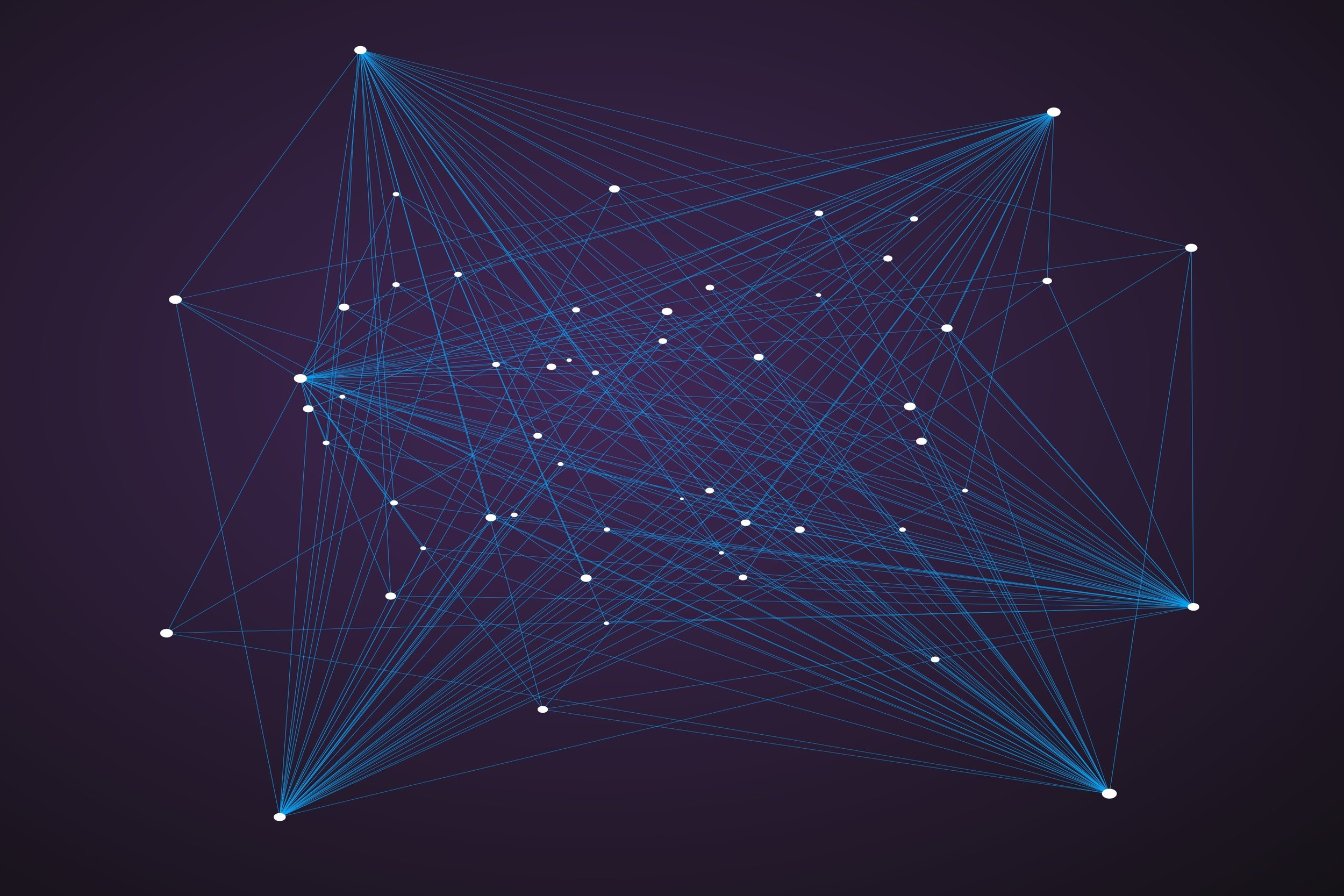
In biology, an ecosystem is a community of organisms and their physical environment. The notion of an ecosystem recognizes the many ways that an organism interacts with and depends on various parts of its environment. The ecosystem idea generalizes the "food chain" and "food web" concepts, allowing for more relationships than just consumption. For example, plants provide not just food for animals but also shelter, shade, moisture, etc.
While organisms in an ecosystem may be engaged in competition or predation, the concept focuses on interdependence — one organism's reliance on another or on the ecosystem as a whole.
The idea of an ecosystem has been adopted for social and economic systems. An "ecosystem" is the environment that a company is part of, including suppliers, partners, consumers, and the underlying structure and behavior of the technology, markets and social context. Framing economic interactions as being an ecosystem promotes establishing alliances with companies that might have been seen as competitors. There are many possible economic relationships, just as there are many possible relationships between organisms in a biological ecosystem.
One can contrast the use of the term "ecosystem" with that of "system," which focuses on the collective behaviors. "Ecosystem" is typically used in discussing the internal dependencies of the larger system especially as they pertain to a particular part. For example, one might say "A is part of B's ecosystem" to recognize B's dependence on A in the larger context. Thus, "ecosystem" is almost a substitute for the term "environment," but it emphasizes the existence of various parts of the environment, rather than the environment as a single entity.
Still, in ecology, the term also alludes to whole-system collective behaviors, such as the forest lifecycle that might include destruction by fire and stages of regrowth.
The idea of an ecosystem means viewing an organism, corporation, or other entity as part of a larger system whose parts are interacting and interdependent.
Related concepts: system, network, environment, coevolution, emergence
Copyright © 2011 Yaneer Bar-Yam All rights reserved.