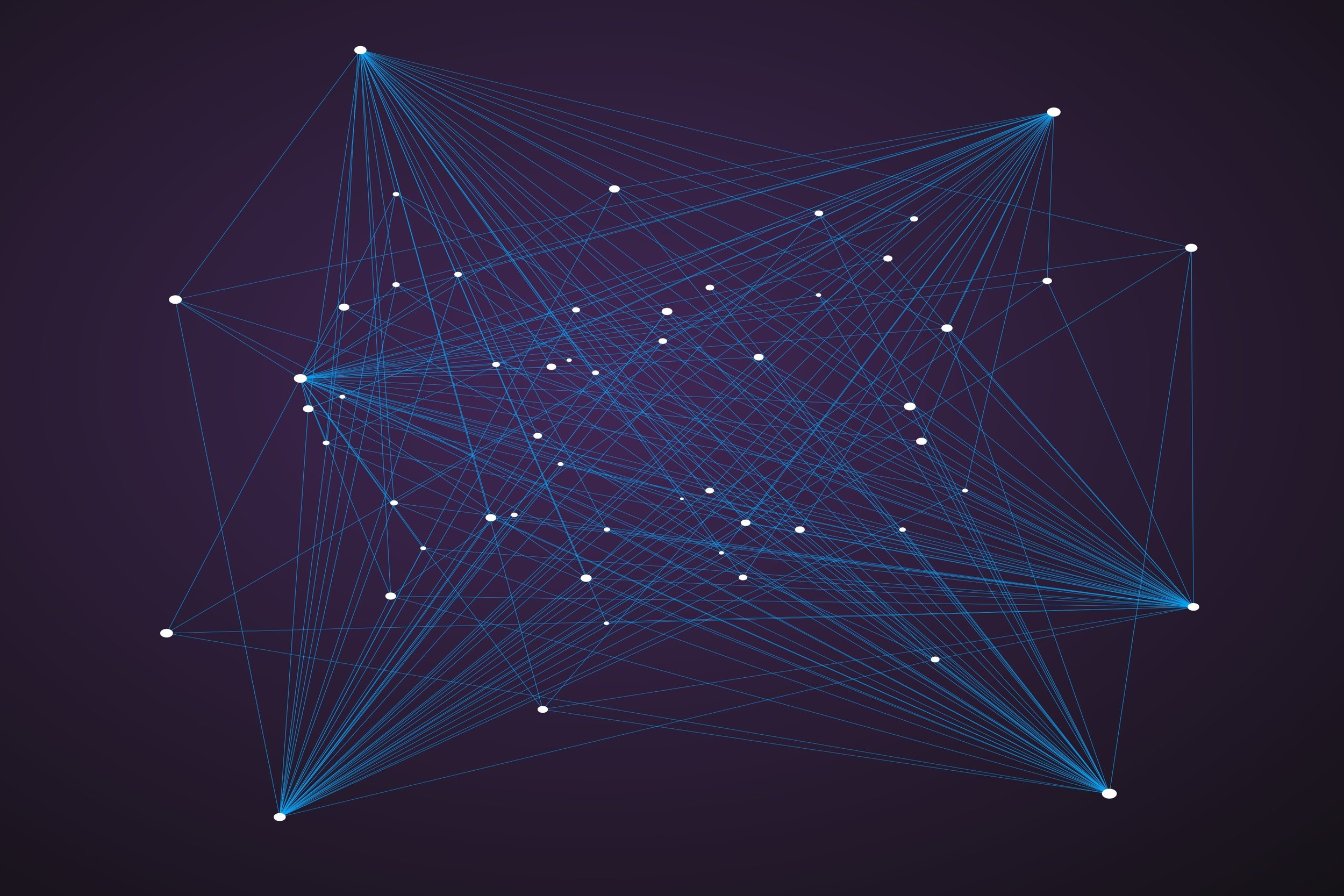
The term "chaos" is popularly used to refer to disorder or confusion. In science, chaos is an important conceptual paradox that has a precise mathematical meaning:
A chaotic system is a deterministic system that is difficult to predict.
A deterministic system is defined as one whose state at one time completely determines its state for all future times. Therefore, we normally think that a deterministic system is completely predictable, and this is mathematically true. So what does it mean for a chaotic system to be difficult to predict?
The real question is how accurate a prediction can be made for what length of time given a certain amount of information. A deterministic system can be difficult to predict because what happens in the future can be very sensitive to the system"s current state. Because it is impossible to measure the system"s current state with complete precision, it may be impossible to predict the system"s distant future. This property, called "sensitivity to initial conditions," has been popularly called the Butterfly Effect, based on the idea that a large storm in New England may be due to a butterfly flutter in China, because in a chaotic system, which displays sensitivity to initial conditions, a small change in the conditions at one point (say, a butterfly"s effect on air currents) could drastically change the course of events later on (even to the point of creating a storm).
A technical way to describe this sensitivity is as the divergence of trajectories of the system. Over time, a system starting from one state becomes less and less similar (farther and farther away in state space) to a system that starts out in a similar, but not exactly the same, state. Thus, while measurements may be close, they are not exactly the same as the system"s actual state, so over time, the system"s actual trajectory will diverge from that predicted based on the measurements. This means that the more accurately the initial state is known, the more accurate a prediction can be. The problem is that in many practical cases, the degree of accuracy needed to make useful predictions is impossible to obtain.
The paradox of chaos strikes at the roots of traditional concepts of science, which tell us that a reasonable amount of knowledge of a deterministic system should enable us to predict its behavior. For chaotic systems, as long as any uncertainty remains in the precision of our measurements, our ability to predict is quite limited.
Chaos is not the only source of unpredictability of a system's behavior. Conceptually, there are three sources of unpredictability: influence of random noise; the effect of the environment on the system; and lack of knowledge of the initial conditions. The third is the one considered by studies of chaos.
Chaos and fractals are related; however, what is called "fractal dynamics" is not the same as chaos.
Related concepts: Butterfly Effect, non-linear dynamics, scales, prediction, noise, chaos and complex systems, complexity at different scales, complexity profile, free will and determinism
Copyright © 2011 Yaneer Bar-Yam All rights reserved.